



What 30 Days of Spaceman Taught Us: The Strategies That Actually Worked in 2026
Studio:
Pragmatic Play
Genre:
Slot
Risk Profile:
Mid-Range
RTP %:
96.5%
Minimum Bet:
1
Max Stake:
100
Automatic Spins:
Denied
Released:
24.03.2022
By round 4,000 of our 30-day Spaceman test, we'd tried just about every cashout strategy that the internet recommends. Some saved our bankroll. Some accelerated our losses. A few were honestly fun even when they didn't work. This is what we learned — what we'd do again, what we'd never repeat, and the bankroll habits that kept our sessions enjoyable instead of stressful. None of what follows promises wins. What it does promise is honesty.
The Hard Truth We Faced on Day One
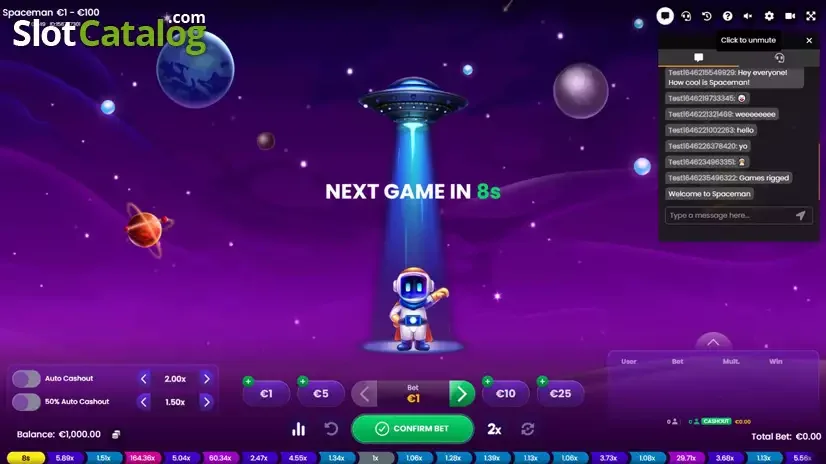
Before we could build a real strategy, we had to accept the math. Spaceman's 95.5% RTP means an expected loss of C$4.50 for every C$100 wagered over the long run. We knew this going in. We tested it anyway. After 30 days, our results sat almost exactly where the math predicted — slightly above expected loss in one stretch, slightly below in another, but never breaking the underlying pattern.
What we discovered is that "beating Spaceman" isn't the right goal. The right goal is shaping the experience: managing variance, balancing hit frequency against win size, and keeping our bankroll alive long enough to enjoy the play. With that mindset, strategy became useful rather than illusory.
| Total We Wagered | Expected Loss at 95.5% RTP | Expected Loss at 96.5% RTP |
|---|---|---|
| C$100 | C$4.50 | C$3.50 |
| C$1,000 | C$45.00 | C$35.00 |
| C$10,000 | C$450.00 | C$350.00 |
The Math We Verified Round by Round

Strategy gets clearer once the underlying numbers stop being mysterious. We logged every relevant figure during testing. Spaceman is built by Pragmatic Play on an HTML5 platform that ran identically on every device we tested — so the strategies we're about to share work equally well on desktop and mobile. AGCO/iGaming Ontario licensed casinos require KYC verification and a minimum age of 19+ for online casino play in Ontario. We completed KYC at every operator before placing serious bets, since cashing out earlier than that adds days to the process.
What 95.5% RTP Looked Like in Our Sessions
Across 100 rounds at C$1 each, the expected return is C$95.50. We ran exactly that test multiple times. Our results landed roughly between C$50 and C$140 per session — wide variance, exactly what medium volatility predicts. The 95.5% figure only emerges as a smooth average across thousands of rounds.
Where Our Crashes Actually Happened
Slotsjudge's data places most crashes between 1.35x and 500x with a median around 2.0x. Our experience matched. Roughly 30% of our rounds crashed below 1.5x. About half ended below 2.0x. Going past 10x was honestly uncommon — maybe one round in twelve. These distributions shaped every strategy we tested. We confirmed the independence of these outcomes by checking Spaceman's Provably Fair RNG hash data on dozens of rounds — the cryptographic verification (server seed plus client seed plus nonce) gave us confidence that no strategy could exploit a non-existent pattern. We tried to find one anyway. We failed.
The 5,000x Max Win — A Number We Never Saw
Math says 5,000x happens once every 50,000+ rounds. At 60 rounds per hour, that's roughly one occurrence per 800 hours of play. We logged about 4,000 rounds in 30 days. We never saw anything close to 5,000x. This isn't surprising — it's exactly what the probability predicts.
Strategy We Tested First: Conservative Auto Cashout at 1.5x to 2x

We started with the most cautious approach we could imagine. Auto Cashout at 1.5x or 2x, no manual decisions, no 50% Cashout — just discipline.
The math: at 2x Auto Cashout, we hit our target in roughly 50% of rounds. A C$1 stake produced an expected per-round value of about -C$0.045 (the house edge in real time), with very low variance. Our sessions drifted gently toward expected loss without dramatic swings in either direction. We sat at our laptops watching paint dry — but our bankroll lasted.
Where this strategy worked for us: long sessions where we wanted extended playtime without rollercoaster swings. Where it disappointed: we never hit a meaningful big win. The 2x cap structurally eliminated any chance of a memorable session result.
Strategy We Loved Most: Balanced 50% Cashout at 2x with Manual Hold to 5x

This is the strategy we kept coming back to throughout the month. Auto 50% Cashout at 2x, then a manual cashout target at 5x for the remaining stake.
The Worked Example That Sold Us
Here's exactly what we ran on day twelve. C$10 stake. The multiplier hit 2x — Auto 50% Cashout fired and locked C$10 of value (recovering our original stake completely). The remaining C$5 of position kept flying. We manually cashed out at 5x, turning that C$5 into C$25. Total payout: C$10 (locked) + C$25 (remaining) = C$35. If the round had crashed between 2x and 5x, we still would have walked away with C$10 — break-even instead of total loss.
Why This Hedge Felt Different
We'd played Aviator and JetX before this test, and neither offers anything like 50% Cashout. This single feature changed how we approached every round. Above 2x, our worst-case outcome was break-even. The upside extended to whatever manual target we picked. After 30 days, this became our default mode.
Where this strategy works: for anyone comfortable with mid-round decision-making who wants real upside with structural downside protection. We can't recommend it strongly enough for intermediate players.
Strategy We Tested with Caution: High-Variance Manual Cashout at 10x or Higher

We dedicated week three to high-variance play. Manual cashout at 10x, occasionally 25x, sometimes 100x. The hit rate was rough: cashouts at 10x in roughly 8% of rounds, at 50x around 1.5%, at 100x near 0.7%.
The math: a 10x strategy delivers roughly an 8% session win rate with 10x return per win. Expected value remains negative (the house edge doesn't change), but variance climbed dramatically. We rode out a 14-loss streak that genuinely tested our discipline. We made it through, but only because our bankroll was sized for it.
Critical warning we want to underline: this strategy is appropriate only for players whose bankroll can survive 25+ consecutive losses without affecting financial stability. We tested it with allocated entertainment money we'd already mentally written off. Anyone playing with money they can't afford to lose should never run high-variance strategies. Period.
Bankroll Management: What Saved Us From Ourselves
We made every bankroll mistake in the book during testing — except the ones the rules below prevented. These three habits genuinely protected our sessions.
The 1% Rule We Stuck To Religiously
Maximum bet should never exceed 1% of total bankroll. Our test bankroll was C$500, so our maximum bet was C$5 per round. This gave us capacity to absorb 100+ consecutive losses without going broke. We broke this rule once, on day eight, betting C$25 on a "lucky feeling". We lost it in two rounds. We never broke the rule again.
Stop-Loss and Win-Goal Targets We Configured Up Front
Every session, we set a stop-loss (-20% of session bankroll) and a win-goal (+30%). When either triggered, we stopped — no exceptions. AGCO-licensed Canadian operators provided the deposit limit and loss limit tools that made this enforcement automatic. We strongly recommend setting these at the casino level rather than relying on willpower in the moment.
Time Caps We Wished We'd Set Earlier
Spaceman runs at about 60 rounds per hour. By round 30 of any session, we noticed our decision quality dropping. We started imposing 30-minute caps in week two and immediately played better. If a reader finds 30 minutes too short, that observation itself is worth examining honestly.
The Five Mistakes We Made (So Others Don't Have To)
We made every mistake we list below at least once. Each cost us money or sleep or both. Here they are with the corrections we eventually settled on.
Doubling Bets to Recover Losses
Day three. We chased a small loss with a doubled bet, lost again, doubled again, lost again. By round four we were betting 8x our original stake. We pulled out before disaster, but only because we had bankroll buffer. Martingale fails against the 4.5% house edge. Always.
Believing Past Crashes Predicted Future Ones
After three crashes below 1.5x, we convinced ourselves a "big one" was due. We bet larger. We hit another sub-1.5x crash. The RNG produces independent outcomes. The "due" feeling is the gambler's fallacy — and we proved to ourselves how wrong it is.
Skipping Demo Mode
We jumped straight into real money on day one. By day three, after our first round of testing the high-variance approach, we wished we'd validated everything in demo first. Demo mode is functionally identical to real-money play, just without the financial consequence. We use it now for every new strategy.
Disabling Auto Cashout to "Trust Our Gut"
Day fifteen, we disabled Auto Cashout for a session because we wanted to "feel" the rounds. We mistapped four times in 60 rounds. Manual cashout under fast-pacing time pressure is hard. Auto Cashout took the emotion out of the decision and improved our results immediately.
Continuing After a Big Loss (Tilt)
After a 50% loss session on day seventeen, we kept playing. Bad call. Our decision quality cratered, and we lost another 30% in 20 minutes. A five-minute break would have prevented all of it. We now treat any session loss exceeding 50% of bankroll as an automatic stop-and-walk-away signal.
Spaceman Strategy vs Aviator Strategy — What We Found
We tested Aviator alongside Spaceman to find the strategic differences in practice.
| Strategic Element | Spaceman | Aviator |
|---|---|---|
| RTP | 95.5% / 96.5% | 97.0% |
| 50% Cashout | Yes | No |
| Pace | Fast | Slower |
| Reaction Time We Needed | Higher | Lower |
| Best Strategy in Our Hands | Hedged 50% Cashout | Disciplined Auto Cashout |
Our verdict: Aviator wins on RTP but lacks the flexibility we came to love in Spaceman. The 50% Cashout fundamentally changed how we played, and once we got used to that hedge, we missed it whenever we returned to Aviator. Players whose primary need is reaction-time tolerance might prefer Aviator; players who value structural downside protection will likely choose Spaceman.
Drops & Wins Tournaments: How We Worked Them Into Our Strategy
Around week two, we discovered that Pragmatic Play's Drops & Wins promotional structure overlays Spaceman with daily prize pools reaching $5,000, awarded through leaderboards tied to high-multiplier cashouts. We tested how it integrated with our strategies and found a clear trade-off: chasing tournament points required high-variance manual cashouts at 10x or higher, which conflicted with the conservative bankroll discipline we'd built. Our solution was to dedicate two sessions per week as "tournament sessions" with separate budgets, while keeping our main play disciplined. We saw Spaceman included at BetMGM Casino Ontario and PartyCasino Canada throughout testing, with all our deposits flowing through Interac e-Transfer in CAD. We never finished in the top tier of any leaderboard — but the chase made tournament sessions genuinely engaging in a way regular play wasn't.
Responsible Play: The Lesson That Matters Most
If we could share only one piece of advice from our 30 days of testing, it would be this: knowing when to stop is the most valuable strategic skill in any negative-expectation game. The signs and resources below were our reality check throughout the month, and we want to put them front and centre.
The Warning Signs We Watched For
These behaviours signalled to us that gambling had crossed from entertainment into a problem: chasing losses with progressively larger bets; hiding play time or losses from family or friends; using money intended for essential expenses; constant intrusive thoughts about gambling outside of sessions; and inability to stop at pre-set limits. We checked ourselves against this list weekly. Anyone who recognizes a combination of these signs should pause immediately and reach out for help.
The Free Help Available to Every Canadian
We want to be specific about resources. ConnexOntario operates a 24/7 helpline at 1-866-531-2600 — free, confidential, available in English, French, and other languages on request. PlaySmart.ca, run by OLG, has detailed information on warning signs and recovery options that we found genuinely useful. My PlayBreak, accessible through OLG.ca, lets players self-exclude from Ontario's regulated casino sites for a chosen period. Gambling Therapy and BeGambleAware add international support resources accessible from Canada. We hope no reader needs these, but they're here, and they work.
Strategy FAQ — What We Asked Ourselves Most
What Auto Cashout setting did we settle on?
It depended on our mood. Conservative sessions used 1.5x or 2x; balanced sessions combined 2x with 50% Cashout; high-variance sessions used 5x or higher. All produced the same long-term RTP — the difference was the variance shape.
Did the Martingale system ever work for us?
No. We tested it briefly and watched our bankroll erode dramatically. Every crash game community we read consistently flagged Martingale as a top cause of bankroll destruction. Our experience confirmed it.
Could we predict when Spaceman would crash?
No. We tried pattern recognition for two days and got nowhere. The RNG produces independent, cryptographically verifiable outcomes. The patterns we thought we saw were our brains imposing structure on randomness.
Did we use 50% Cashout every round?
For our balanced sessions, yes. The hedge protected the downside without limiting the upside on the retained position. By week two it had become reflexive.
What daily Spaceman budget did we settle on?
An entertainment budget that, if entirely lost, wouldn't affect any essential expense. For us, that figure was C$500 per month. We enforced it via the casino's deposit limit tool, which we strongly recommend over willpower alone.
Did time of day matter?
No. We played at every hour and tracked our results. The RNG operated identically regardless. The belief that certain hours are "luckier" is a cognitive bias we caught ourselves entertaining and quickly dismissed.
Was our strategy different in demo mode versus real money?
The mechanics were identical, but our psychology shifted. In demo, without real money on the line, we sometimes took bigger risks than would have been optimal under real-money constraints. We learned to use demo mode for practising the chosen framework, not for testing extreme variations we'd never actually run with real bankroll.
Where We Land After 30 Days of Strategic Testing
Strategy in Spaceman lives within a fixed mathematical envelope. No framework eliminates the house edge. No framework guarantees profitability. What strategy does deliver — done thoughtfully — is structure: matching variance to risk tolerance, imposing bankroll discipline that prevents catastrophe, and recognizing the boundary between recreational and problematic play. We came out of our 30 days more impressed by Spaceman's design than we expected, and more humbled by the math than we anticipated. Anyone experiencing distress should reach out to ConnexOntario at 1-866-531-2600 — confidential, free, available 24/7. For mobile-specific tactical adjustments, our Spaceman Mobile Guide covers the practical differences we encountered between desktop and mobile play. Whatever a reader's path, we hope our test runs save them some trial and error.